
Published November 24, 2026
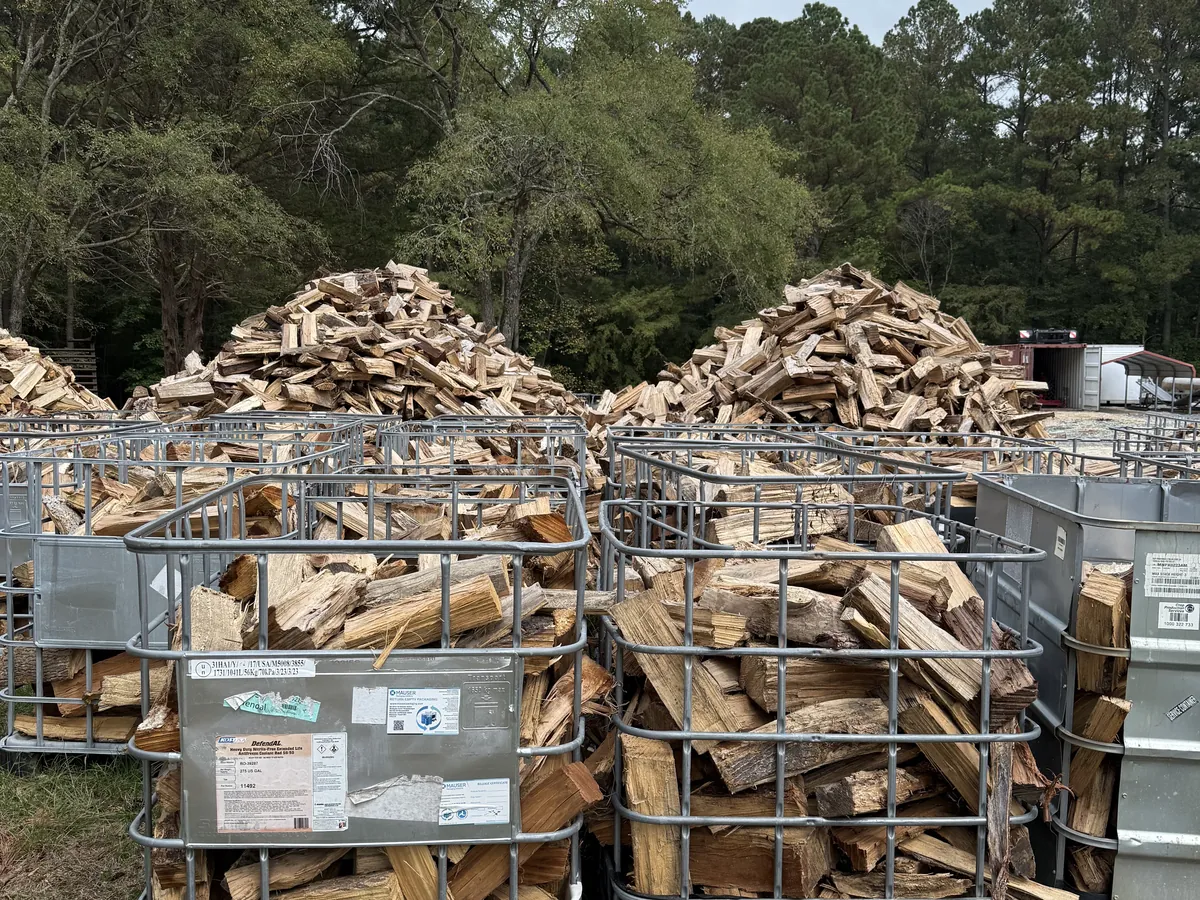
Hickory is the wood we set aside for cooking. Our Premium Oak and Hardwood Mix are for heat, in the fireplace, the wood stove or the fire pit, and the hickory gets cut and split for people in Wake Forest who smoke a pork shoulder on Saturday or fire up a grill a few nights a week. It's a different job from heating a house, and it calls for different wood.
If you've only bought firewood for the fireplace, a few things work differently with cooking wood. The size of the split matters more. Seasoning matters a lot more, because you're eating what the smoke touches. And how you store it between cooks decides whether the last pieces burn as clean as the first.
Why hickory works for barbecue
Hickory gives a strong, savory smoke. It's the wood a lot of people expect to taste on ribs, pork shoulder, brisket, chicken, sausage and bacon, and it holds up to long cooks where a milder wood would barely register. The USDA's guidance on smoking meat says the most satisfactory smoke flavor comes from hickory, apple or maple.
It's also a local tree. Mockernut, pignut and shagbark hickory are all native to North Carolina, according to NC State Extension's plant database.
Hickory is strong, though. On a small cut or a piece of fish, too much of it can taste bitter. If you're new to it, start with less wood than you think you need and add more on the next cook.
Why the splits are 16 inches and split small
Our hickory comes in 16-inch logs split small to fit a smoker or grill. Full-size firewood splits are made for a firebox that's built to take them. Most backyard smokers and kettle grills aren't. A big round chunk of hickory on a small fire will smolder before it burns clean, and smoldering wood is where the heavy, acrid smoke comes from.
Smaller splits catch faster and burn hotter, so they give a thin, steady smoke that's easier to manage. On an offset smoker you can add one or two at a time as the fire needs it. On a charcoal grill or kettle, a smaller piece set on lit coals gives you smoke without taking over the fire. If you need pieces smaller still, a hatchet will take a 16-inch split down to chunks in a few minutes.
Some setups run on chips instead of splits, like a charcoal water smoker or a smoker box on a gas grill. For those, the USDA suggests soaking the chips in water to prevent flare-ups and adding about a half cup at a time to the charcoal.
The USDA also says to set a smoker in a well-lit, well-ventilated spot away from trees, shrubbery and buildings. Speaking as a tree company, we'd add one thing: look up before you light it. Heat and sparks rising off a cooker all afternoon can scorch a low limb, and it's easier to move the cooker than the tree.
For the cook itself, the USDA's numbers are the ones to follow. Keep the smoker's air temperature between 225 and 300 degrees Fahrenheit the whole time, and expect a cook to take anywhere from 4 to 8 hours. Use a food thermometer: 145 degrees for whole cuts of beef and pork with a 3-minute rest, 160 for ground meat, and 165 for all poultry. Get leftovers into the refrigerator within 2 hours of taking them off.
Telling seasoned cooking wood from green
Freshly cut wood can have a moisture content of 100 percent or more, according to Cornell Cooperative Extension, which means about half its weight is water. Wet wood smolders, puts out more smoke and leaves creosote behind. In a fireplace that's a chimney problem. In a smoker, it ends up on the meat.
Cornell puts the target for burning wood below 20 percent moisture, and says getting green wood there takes at least six months, and longer for some hardwoods. Hickory is a dense, heavy wood, so give it time. A few ways to check what you have:
- Look at the ends. Seasoned wood has cracks, called checks, running in from the bark, sometimes up to a quarter inch wide.
- Knock two pieces together. Dry wood gives a sharp crack. Green wood sounds dull.
- Use a moisture meter. Split a piece and test the fresh face in the middle, since the outside dries first.
If you're unsure about any wood you buy, ours included, those three checks will tell you more than any label.
Storing hickory between cooks
Cooking wood gets used slowly. A bundle that lasts a single winter night in the fireplace might last a month of weekend cooks, so how you keep it matters.
Cornell's storage advice fits a small cooking pile as well as a cord of firewood. Stack it off the ground on a pallet or a couple of boards. Cover the top with a tarp or a scrap of metal roofing and leave the sides open so air moves through. Keep the stack about 30 feet from the house, since bugs and rodents like to live in woodpiles.
Here in Wake County, summer humidity works against you. A pile left under a tight tarp with closed sides through a muggy August will take on moisture and can grow mold on the bark. Open sides and a little sun help. If a piece comes out of the stack dark, soft or musty, put it in the fire pit and keep it out of the smoker.
Keep the hickory separate from your heating wood, too. It's easy to grab the wrong split in the dark, and pine scraps or old construction lumber in the same pile can end up in the cooker by mistake.
Getting hickory from us
The hickory isn't on a set price list the way our oak and hardwood mix are. Get in touch for availability and pricing, and we'll tell you what we have and how it's split. We offer local delivery in the Wake Forest and North Raleigh area (see our service area for the towns we cover), and the firewood page has our heating wood options alongside the hickory. Fonville Tree Service has been working out of Wake Forest since 1996.
Before you call, measure the firebox or the grill grate on your cooker and tell us the size. It's the fastest way for us to know if the standard split will fit or if you'll want it cut down.